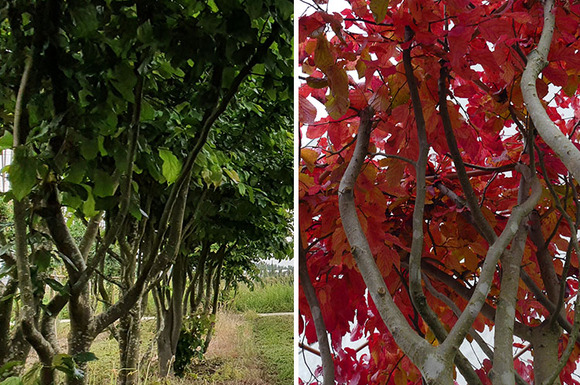
Parrotia persica | Strong - Elegant - Exceptionally colourful
- Reading time: 5 min.
- 2299x
The Parrotia, known in botanical literature as Parrotia persica (Dutch: Perzisch ijzerhout), is one of the most characterful ornamental trees in the Hamamelidaceae family. The species is native to the Hyrcanian forests along the Caspian Sea in Iran and Azerbaijan. This region is known for its pronounced seasonal shifts, high humidity and cold winters — conditions that explain why Parrotia excels in Europe in terms of winter hardiness, drought tolerance, and natural disease resistance. Parrotia trees can reach an exceptional age and withstand temperatures down to –25 °C.
- Tom
In this article
Origin, strength and botanical characteristics
The Parrotia, known in botanical literature as Parrotia persica, is one of the most distinctive ornamental trees in the Hamamelidaceae family. The species occurs naturally in the Hyrcanian forests along the southern coast of the Caspian Sea (Iran and Azerbaijan). This area is known for its distinct seasons, high humidity and cold winters — conditions that explain why Parrotia excels in Europe in terms of hardiness, drought tolerance and disease resistance.
Distinctive characteristics:
-Extremely strong wood that hardly splits and is resistant to wind and frost.
-Early flowering (February–March) with reddish-purple stamens on bare branches.
-Flaky bark in mosaic patterns of grey, brown and green. -High ornamental value in all seasons, with one of the most spectacular autumn colours among ornamental trees.
-Suitable for urban environments thanks to its tolerance for air pollution and varying soil conditions.
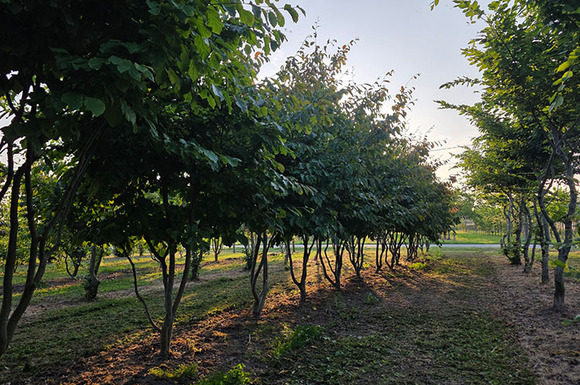
Three of Our Highlighted Parrotia Selections
At Espaliers, we select Parrotia trees based on form, branching structure, trunk quality and colour intensity. Within our collection, we distinguish three cultivars that have proven themselves in terms of beauty, visual impact and suitability for the Belgian and Dutch climate.
1. Parrotia persica – The Botanical Classic
The natural form of Parrotia persica is a broad, spreading, often multi‑stemmed tree with a characterful, irregular structure. This species is known for its strength, four‑season ornamental value and natural elegance. Although ‘Vanessa’ and ‘Bella’ are beautiful selections, the pure botanical form remains our timeless favourite.
Botanical characteristics
Growth habit: broad, dynamic, often multi‑stemmed
Leaves: dark green in summer, intense red‑orange in autumn
Bark: decorative, exfoliating, excellent winter interest
Height: 6–10 m (standard), 4–6 m (multi‑stem)
Why choose Parrotia persica?
Exceptionally strong and low‑maintenance
Ornamental value in all four seasons
Suitable for both modern and natural garden styles
Ideal as a specimen tree, multi‑stem or shaped form
2. Parrotia persica ‘Vanessa’ – The Elegant Upright Selection
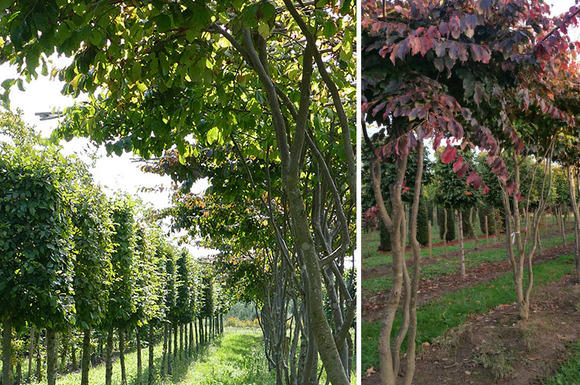
Parrotia persica ‘Vanessa’ is a columnar to narrowly upright selection, ideal for smaller gardens, contemporary designs and projects where vertical structure is important. It retains the ornamental qualities of the species but with a more controlled and refined silhouette.
Botanical characteristics
Growth habit: narrow upright, later slightly broader but always elegant
Leaves: fresh green with a very consistent, vivid autumn colour
Bark: decorative, similar to the species
Height: 6–8 m, with a limited crown width
Why choose ‘Vanessa’?
Perfect for limited spaces
Strong, straight trunk with even branching
Excellent for avenues, driveways and modern gardens
3. Parrotia persica ‘Bella’ – Compact, Densely Branched and Intensely Coloured
Parrotia persica ‘Bella’ is a relatively new selection, notable for its compact growth, dense branching and exceptionally deep autumn colours. This cultivar combines the strength of the species with a more refined, ornamental appearance, making it ideal for architectural gardens and specimen planting.
Botanical characteristics
Growth habit: compact, broad, very finely branched
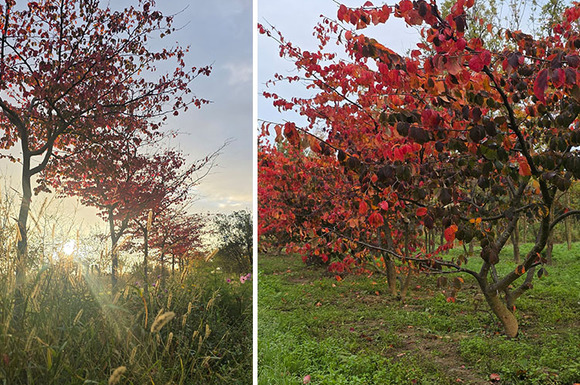
Leaves: intense red, purple and orange in autumn — often richer than the species
Bark: striking mosaic pattern, strong winter interest
Height: 4–6 m, ideal for medium‑sized gardens
Why choose ‘Bella’?
Compact and manageable without losing ornamental value
One of the most spectacular autumn colours within the genus
Perfect for specimen use, patios and architectural designs
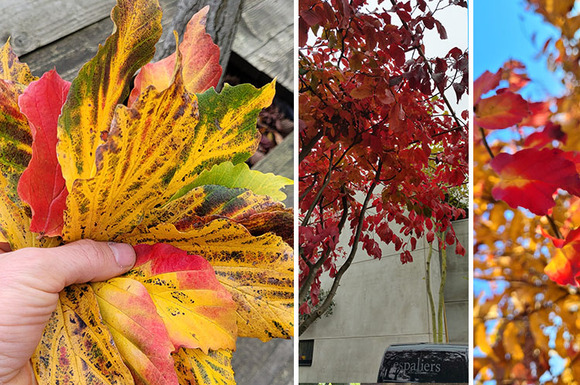
Autumn Colour – Among the Finest in Europe
Parrotia is renowned for delivering one of the most spectacular autumn colour displays of any ornamental tree. Depending on the cultivar, soil conditions and light intensity, the foliage can turn:
yellow
golden orange
fiery red
cherry red
deep purple
The leaves often show multiple colours at once, with several shades visible simultaneously. This makes Parrotia a true seasonal feature tree, offering unmatched visual impact from late summer onwards, and especially in October and November.
For landscape architects, Parrotia is a reliable choice whenever colour, texture and seasonal expression are key design elements.
Versatility – From Modern Gardens to Natural Gardens
Parrotia is one of the most versatile ornamental trees for the Western European climate. Thanks to its robustness, compact growth and high ornamental value, it adapts beautifully to a wide range of applications:
Modern gardens: clean lines, vertical accents (‘Vanessa’).
Naturalistic gardens: irregular, characterful multi‑stem forms.
Public spaces: robust, low‑maintenance and resistant to vandalism.
Avenues and driveways: strong trunk and well‑structured crown.
Architectural projects: winter interest through bark and silhouette.
At Espaliers, each Parrotia is selected for its form, branching structure, trunk quality and colour intensity, ensuring that every specimen is immediately suitable for high‑end landscape projects.